Engineered to Sparkle. Crafted to Last.
Explore how Fiametta brings science, artistry, and sustainability into every diamond.
What Is Diamond Engineering?
Diamond engineering is where science meets artistry. It’s the discipline of aligning every facet and cut to exact proportions, polishing with ultra-fine precision, and optimizing the way light moves through the stone. The result? A diamond designed for enduring brilliance, engineered to last.


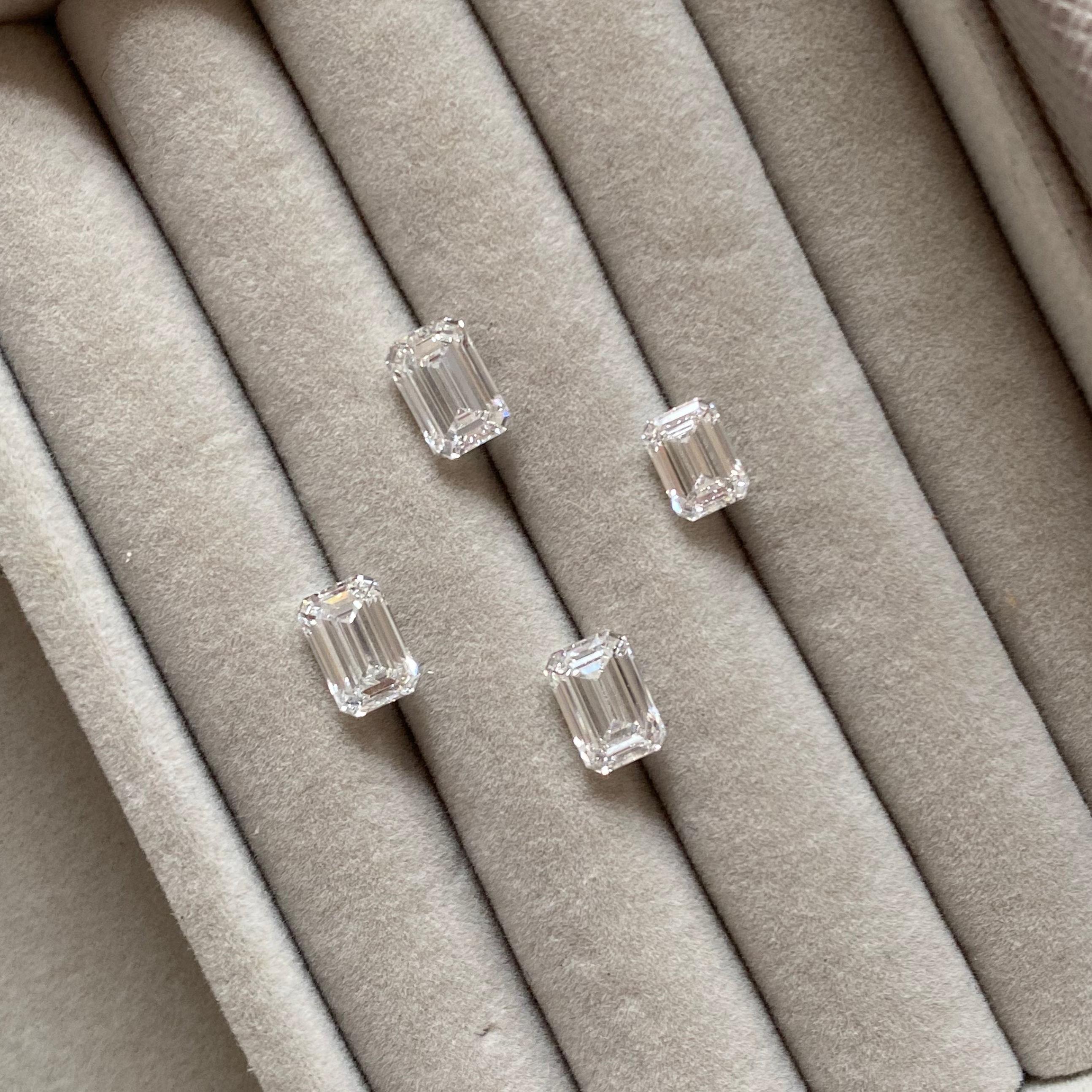
Diamond Clarity
Clarity measures how free a diamond is from internal marks (inclusions) or surface blemishes. While most are invisible to the naked eye, they can affect both beauty and durability. For lab-grown diamonds, clarity is graded using the same global standards as natural stones. Each grade reflects how visible inclusions are under 10x magnification—from Flawless (no visible marks) to Included (inclusions visible to the eye).
Lab-Grown vs. Natural: Which Is Right for You?
At Fiametta, natural and lab-grown diamonds are held to the same uncompromising engineering standards. Both are real, both are rare in their own right, and both are crafted to deliver exceptional light performance. The choice is yours—guided by personal preference, never by compromise.
| Category | Lab Diamond | Natural Diamond |
|---|---|---|
| Durability | 10 on the Mohs scale | 10 on the Mohs scale |
| Brilliance | Refractive index ranges from 2.417 to 2.419 | Refractive index ranges from 2.417 to 2.419 |
| Color | Primarily colorless, but can also occur in many color options that are often more vivid than natural options. | Primarily colorless, but can also occur in many color options including pink, blue, and yellow. |
| Grading | Graded on cut, color, clarity, and carat. | Graded on cut, color, clarity, and carat. |
| Certification | Certified by reputable gemological institutions. | Certified by reputable gemological institutions. |
| Origin | Grown in controlled laboratories over several days to weeks, then cut and polished. | Formed deep in Earth over billions of years, mined, cut, and polished. |
| Rarity | Can be produced in increasing quantities as technology advances. Not considered geologically rare, but challenges the perception of rarity created by the mined diamond market. Offers a transparent, more accessible alternative. | Formed under extreme geological conditions, making them relatively rare. However, the perception of extreme scarcity has been influenced by industry practices and marketing campaigns. While natural diamonds are geologically rare, their perceived scarcity has been amplified by industry supply control and marketing. |
| Price | Lower cost due to availability. | Higher cost due to mining and rarity. |
Lab Grown Diamond FAQ
-
Absolutely! Lab-cultivated diamonds, also known as lab-grown diamonds, are real diamonds. They possess the same physical, chemical, and optical properties as natural diamonds. The only difference is their origin. While natural diamonds are formed over billions of years in the Earth's mantle, lab-grown diamonds are created in controlled laboratory environments, ensuring they are just as stunning and genuine as their natural counterparts, without the environmental and ethical impact of diamond mining.
-
The primary difference between natural diamonds and lab-grown diamonds lies in their creation. Natural diamonds are formed deep within the Earth under immense heat and pressure over billions of years. Lab-grown diamonds, on the other hand, are produced in a matter of weeks using advanced technological processes that replicate the natural conditions. Both types of diamonds exhibit identical physical, chemical, and optical properties, making them virtually indistinguishable even to experts without specialized equipment.
-
No, lab-grown diamonds are not considered synthetic diamonds because they possess the same physical, chemical, and optical properties as natural diamonds. They are created in controlled environments that replicate the natural diamond-growing process, resulting in a product that is identical to mined diamonds in every way except for their origin. In contrast, synthetic alternatives like cubic zirconia (CZ) and moissanite are composed of different materials with distinct properties. While these alternatives may mimic the appearance of a diamond, they do not match the hardness, brilliance, or overall quality of a true diamond, making lab-grown diamonds a superior and authentic choice.
-
Lab-grown diamonds are created using two main methods: High Pressure High Temperature (HPHT) and Chemical Vapor Deposition (CVD). We use exclusively CVD diamonds in our creations. The CVD method involves placing a carbon-rich gas, like methane, into a chamber where it breaks down and deposits carbon atoms onto a diamond seed, gradually forming a diamond crystal. Both methods result in diamonds that are as beautiful and durable as those mined from the Earth.
-
Lab-grown diamonds are considered a more sustainable and eco-friendly option compared to natural diamonds. Their production typically requires less energy and has a smaller environmental footprint. Additionally, lab-grown diamonds do not involve the extensive mining processes associated with natural diamonds, which can have significant ecological and social impacts. By choosing lab-grown diamonds, you are making a conscious decision to support a more sustainable and ethical jewelry industry.
-
Not all suppliers of lab-diamonds are created equal. When we purchase the loose diamonds for our jewelry, we are looking to ensure that our suppliers are following the highest ethical and environmental standards. Our primary supplier has shown a commitment to environmental and social responsibility, demonstrated by a range of third-party certifications. They are aligned with global climate action through participation in the UN's Climate Neutral Now initiative and have set science-based targets for reducing greenhouse gas emissions as part of the Science-Based Targets Initiative (SBTi). Their dedication to ethical practices is further highlighted by the SEDEX Member Ethical Trade Audit (SMETA) and ISO 20400 certification for sustainable procurement, ensuring responsible sourcing and transparency across the supply chain. Additionally, their ISO 14001 certification for Environmental Management Systems reflects a strong focus on minimizing environmental impact, while their annual sustainability report demonstrates ongoing efforts to meet the United Nations’ 17 Sustainable Development Goals (SDGs). This holistic approach makes them a leader in sustainable practices within the industry.
-
Absolutely! Lab-cultivated diamonds, also known as lab-grown diamonds, are real diamonds. They possess the same physical, chemical, and optical properties as natural diamonds. The only difference is their origin. While natural diamonds are formed over billions of years in the Earth's mantle, lab-grown diamonds are created in controlled laboratory environments, ensuring they are just as stunning and genuine as their natural counterparts, without the environmental and ethical impact of diamond mining.
-
No, lab-grown diamonds are not considered synthetic diamonds because they possess the same physical, chemical, and optical properties as natural diamonds. They are created in controlled environments that replicate the natural diamond-growing process, resulting in a product that is identical to mined diamonds in every way except for their origin. In contrast, synthetic alternatives like cubic zirconia (CZ) and moissanite are composed of different materials with distinct properties. While these alternatives may mimic the appearance of a diamond, they do not match the hardness, brilliance, or overall quality of a true diamond, making lab-grown diamonds a superior and authentic choice.
-
Lab-grown diamonds are considered a more sustainable and eco-friendly option compared to natural diamonds. Their production typically requires less energy and has a smaller environmental footprint. Additionally, lab-grown diamonds do not involve the extensive mining processes associated with natural diamonds, which can have significant ecological and social impacts. By choosing lab-grown diamonds, you are making a conscious decision to support a more sustainable and ethical jewelry industry.
-
The primary difference between natural diamonds and lab-grown diamonds lies in their creation. Natural diamonds are formed deep within the Earth under immense heat and pressure over billions of years. Lab-grown diamonds, on the other hand, are produced in a matter of weeks using advanced technological processes that replicate the natural conditions. Both types of diamonds exhibit identical physical, chemical, and optical properties, making them virtually indistinguishable even to experts without specialized equipment.
-
Lab-grown diamonds are created using two main methods: High Pressure High Temperature (HPHT) and Chemical Vapor Deposition (CVD). We use exclusively CVD diamonds in our creations. The CVD method involves placing a carbon-rich gas, like methane, into a chamber where it breaks down and deposits carbon atoms onto a diamond seed, gradually forming a diamond crystal. Both methods result in diamonds that are as beautiful and durable as those mined from the Earth.
-
Not all suppliers of lab-diamonds are created equal. When we purchase the loose diamonds for our jewelry, we are looking to ensure that our suppliers are following the highest ethical and environmental standards. Our primary supplier has shown a commitment to environmental and social responsibility, demonstrated by a range of third-party certifications. They are aligned with global climate action through participation in the UN's Climate Neutral Now initiative and have set science-based targets for reducing greenhouse gas emissions as part of the Science-Based Targets Initiative (SBTi). Their dedication to ethical practices is further highlighted by the SEDEX Member Ethical Trade Audit (SMETA) and ISO 20400 certification for sustainable procurement, ensuring responsible sourcing and transparency across the supply chain. Additionally, their ISO 14001 certification for Environmental Management Systems reflects a strong focus on minimizing environmental impact, while their annual sustainability report demonstrates ongoing efforts to meet the United Nations’ 17 Sustainable Development Goals (SDGs). This holistic approach makes them a leader in sustainable practices within the industry.